
What to Eat at a Football Tournament: Snacks and Timing for Kids
What to eat at a football tournament comes down to three things: a normal breakfast at home, small and familiar snacks between matches, and water throughout the day. Timing matters more than any particular food. Children play better and feel better when they eat little and often, finish a proper meal well before kick-off and avoid trying anything new on match day.
Do you organise tournaments? Create yours for free on DorsalCUP.
In this article
What to eat at a football tournament: timing comes first
A summer tournament for U9s or U11s might mean five or six short matches between 9am and 3pm, with gaps of 20 minutes to two hours. That is very different from a league Saturday with one match. Children's stomachs do not cope well with a big meal followed by sprinting, and they also run out of energy if they go five hours on a bag of crisps.
The common-sense rule is simple: the bigger the gap before the next match, the more substantial the food can be. A long break allows a sandwich. A short gap allows a few bites of fruit and a drink. Right before a match, nothing except water.
What to eat before a football match
Breakfast should be the child's usual breakfast, eaten at the usual pace, ideally a couple of hours before the first match. Porridge, cereal with milk, toast, eggs, yoghurt and fruit all work if that is what the child normally eats. Match day is not the day to introduce a new food, a new sports drink or a large greasy breakfast at a service station.
- Early start (8am kick-off): a lighter breakfast before leaving, and a banana or a small sandwich in the car.
- Mid-morning start: a normal breakfast at home, then a small snack about an hour before kick-off if they are hungry.
- Nervous children: some children cannot eat much when they are anxious. Offer small amounts they like, such as toast or a cereal bar, and do not force it.
In the last half hour before a match, stick to water. Players who eat a large snack during the warm-up often complain of a stitch or feeling heavy in the first minutes.
Football snacks for kids between matches
Good tournament snacks are easy to carry, do not melt, are not messy and are foods the child already likes. Variety helps, because what a child wants at 10am is not what they want at 2pm after four matches in the sun.
| Gap before next match | Suggested food | Why |
|---|---|---|
| Under 30 minutes | Water, a few orange or apple slices, a few grapes | Easy to digest; refreshes without filling the stomach |
| 30–60 minutes | Banana, small handful of dried fruit, rice cakes, a plain cereal bar | Quick energy that settles in time for the next match |
| 1–2 hours | Half a sandwich or wrap, crackers with cheese, yoghurt, fruit | Enough time to digest something more substantial |
| Lunch break (2 hours or more) | A proper packed lunch: sandwich, fruit, something savoury, water | Refuels for the afternoon matches |
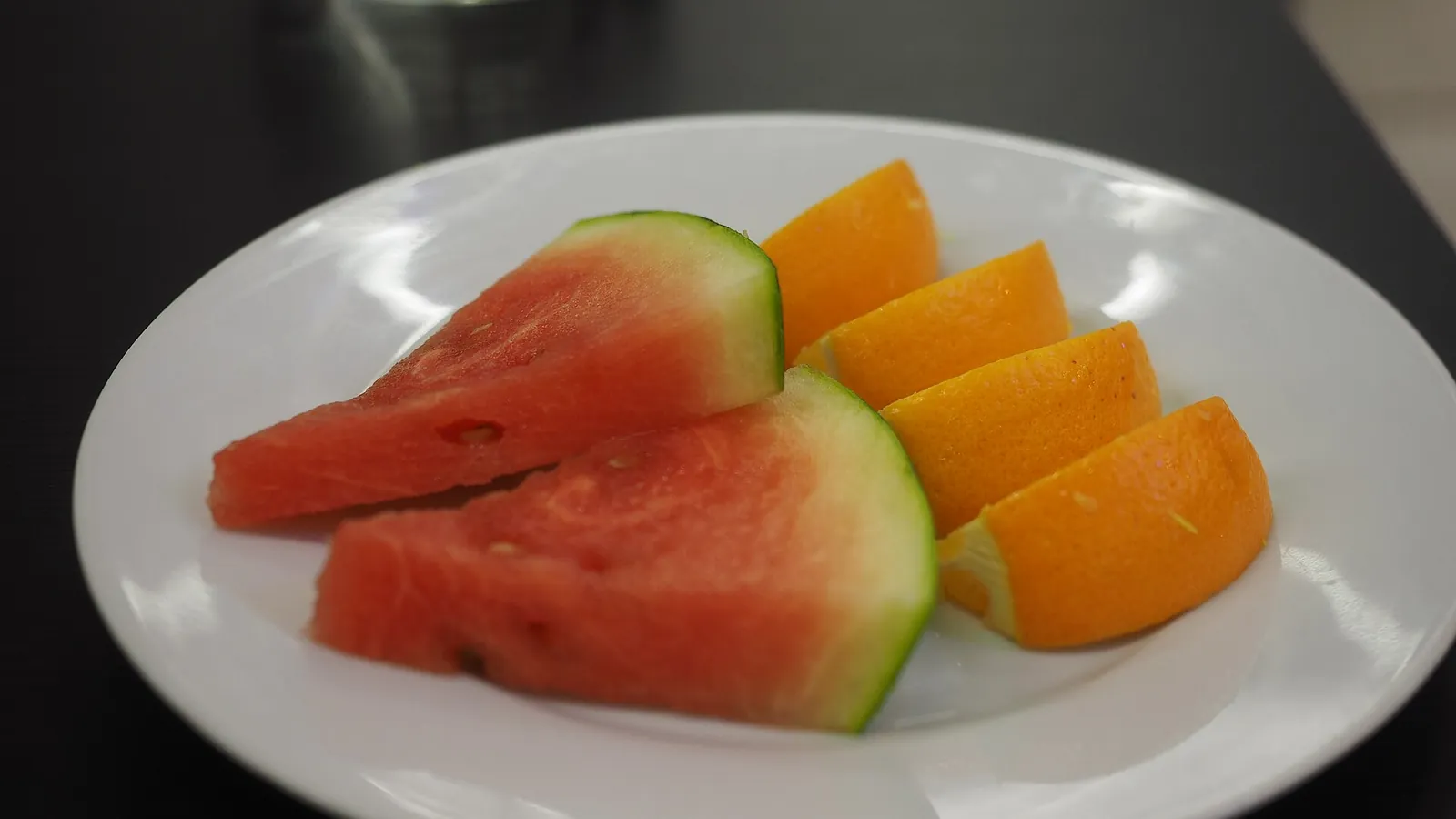
Half-time snacks in youth football are traditionally orange slices, and there is a reason that habit has lasted: they are juicy, light and quick. In a 7v7 match of two 25-minute halves, a few slices and a drink is plenty.
Crisps, chocolate and sweets are part of many tournament days, often from the club's tuck shop. They are fine as a treat at the end, but they do not keep a child going through an afternoon. Fizzy drinks before or between matches tend to cause stomach discomfort when running.
Drinks and staying hydrated
The NHS advises that water and milk are the best drinks for children. On a tournament day, each child should have their own named, refillable water bottle, plus a spare or access to a tap. Sharing bottles spreads colds and stomach bugs around a squad very quickly.
- Drink little and often: a few mouthfuls at every stoppage, at half-time and after each match, not a whole bottle in one go.
- Hot days: drink before feeling thirsty, find shade between matches and bring a hat. Organisers should plan drinks breaks in long matches.
- Sports drinks: usually unnecessary for short youth matches. Water and normal food do the job for most children.
- Warning signs: headache, dizziness, unusual tiredness or feeling sick are reasons to stop, rest in the shade, drink water and tell an adult.
A tournament day packed lunch plan
This is a typical cool bag for a one-day tournament with four to six matches. Adjust portions to the child, their appetite and what they normally eat. Use an ice pack in summer and keep the bag in the shade.
- Two refillable water bottles, filled and named, one of them frozen overnight in summer.
- Fruit that travels: bananas, apples, clementines, grapes in a box.
- One or two small sandwiches or wraps with fillings the child likes, such as cheese, ham, chicken, egg or peanut butter if allowed.
- Something savoury and plain: crackers, breadsticks, rice cakes or pretzels.
- One or two cereal bars or a small bag of dried fruit for short gaps.
- A yoghurt or milk drink for the lunch break, kept cold.
- Wipes, a bin bag and a small towel, because tournament fields are rarely clean.
After the last match, a proper meal at home matters more than anything eaten on the touchline. A normal family dinner with a drink of water or milk is all most children need.
Allergies, club tuck shops and organisers
Clubs and coaches should know which players have food allergies and keep the information with the first-aid kit. Many clubs are nut-aware for this reason, so check before sending peanut butter sandwiches or sharing snacks with teammates. For children with allergies, diabetes or any medical condition, families should follow the advice of their GP or specialist, and the coach should know the plan.
For organisers, food and drink are part of planning, not an afterthought. Free drinking water, shaded areas and a schedule that gives every team at least one longer break make a real difference. If you are organising a tournament on DorsalCUP, the public schedule shows each team's kick-off times, which helps families plan food breaks. Tuck shops can raise money for the club and still offer fruit, sandwiches and water alongside the bacon rolls.
This article gives general, common-sense guidance. It is not medical or nutritional advice for a specific child. If you have concerns about a child's eating, energy levels or health, speak to a health professional.
Frequently asked questions
What should kids eat before a football match?
Their usual breakfast or meal, ideally a couple of hours before kick-off, with water. If the match is early or they are hungry closer to the start, a banana or a slice of toast works. Avoid new foods and large greasy meals on match day.
What are good half-time snacks in football?
Orange slices, a few grapes or apple slices and some water. They are light and quick. Bigger snacks are better kept for the longer gaps between matches.
What should I pack for a football tournament?
Two named water bottles, fruit, one or two small sandwiches, something plain and savoury, a cereal bar, a yoghurt in a cool bag, plus wipes and a bin bag. Pack foods your child already likes.
Do kids need sports drinks at football?
For most youth matches, no. Water, milk and normal food are enough. Sports drinks can upset some stomachs and add sugar the child does not need.
Sources
Verified in October 2026. Rules and age groups vary by association and by season; check your local regulations.