
Fair Play in Youth Football: Respect, Values and Practical Ideas
Fair play in youth football is not a poster on the clubhouse wall. It is how players treat opponents and referees, how parents behave on the touchline and what the coach rewards. In England, The FA's Respect programme gives clubs a framework: codes of conduct, spectator areas, captains' responsibilities and sin bins for dissent. This guide explains those measures and how to teach values in training and at tournaments.
Do you organise tournaments? Create yours for free on DorsalCUP.
In this article
The FA Respect programme in grassroots football
The FA launched Respect in 2008 to improve behaviour in grassroots football. Its youth club guide sets out four steps: codes of conduct, a better match-day environment, captains taking responsibility, and a clear approach from referees. In 2018 The FA refreshed the campaign for youth football with the message We Only Do Positive, aimed at parents, coaches and players from U7 to U18.
Codes of conduct
The FA publishes Respect codes for young players, adult players, spectators and parents, coaches and officials, and match officials. Clubs ask everyone to read and sign the relevant code, keep them on file, and deal with breaches fairly and consistently. Sanctions range from an apology or warning to suspension.
The designated spectators' area
Respect asks clubs to mark an area for spectators, starting two metres from the touchline and running the length of the pitch, ideally on the opposite side to the coaches. Where possible, nobody watches from behind the goals. A line of cones or a rope is enough. This small change gives players space and lets them hear their own coach.
Captains and the referee
In the Respect model, only the captain speaks to the referee about decisions. IFAB has now made its 'only the captain' approach compulsory for all competitions from 1 July 2027. With young teams, the referee may talk to the coach instead if no player is ready for the role.
Sin bins and dealing with dissent
Since 2019/20, dissent in grassroots football in England is punished with a temporary dismissal, or sin bin. Adult players sit out for ten minutes; youth football uses shorter periods set by the competition. During the trials, County FA figures report that dissent fell by 38%, and most players, managers and referees surveyed wanted to keep the system.
For coaches, a sin bin is a chance to teach. Talk to the player calmly afterwards: what happened, what they felt, what they could do next time. Do not argue the decision with the referee in front of the team.
The referee's approach to dissent in the Respect model is stepped: a quiet word first, then a free kick with a word, a public warning, and only then a card. Coaches can mirror that at training. When a player argues with a decision in a practice game, stop briefly, remind them of the team rule, and give them a chance to put it right. Most players respond well to a calm, consistent message, especially when they see it applied to everyone, including the best player in the team.
Teaching fair play in youth football training
Values are learned through repeated behaviour, not speeches. Build them into the normal routine so they become automatic.
- Players referee their own games. In small-sided games, let players make the calls. Arguments become chances to agree on fair decisions.
- Rotate the captaincy. Each player has a turn, with a clear job: shake hands with the referee, lead the warm-up, speak to the team at half-time.
- Praise fair behaviour by name. 'Ben helped up the player he tackled' is worth saying in front of the group.
- Teach how to win and lose. Handshakes after every training game, not only matches.
Practice idea: fair play bonus game
Play 5v5 on a 35 x 25 m pitch for three games of 6 minutes. Normal goals count one point. A team earns a bonus point for a clear act of fair play: kicking the ball out when someone is hurt, owning up to a touch before the ball went out, or helping an opponent up. A team loses a point for arguing with the player-referee. Coaching focus: keep the rules simple and announce bonus points loudly so everyone notices.
Fair play on match day
- Greet the opposing coach and the referee before kick-off.
- Remind parents of the spectator area and the code they signed.
- Keep your own touchline voice calm and limited to encouragement and simple instructions.
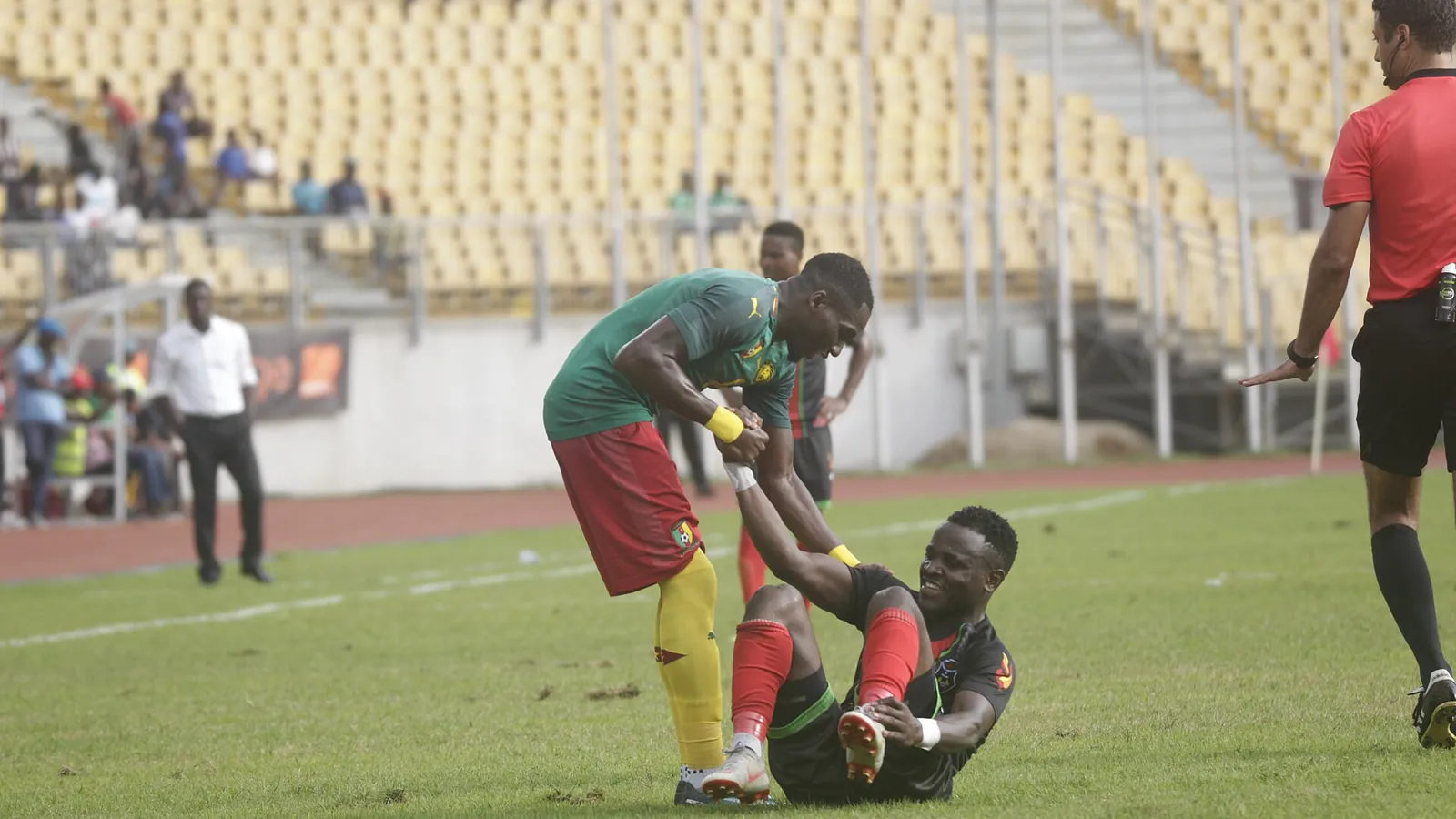
- If an opposing player is hurt, ask your players to stop and check, even if the referee has not stopped play.
- Finish with handshakes for players and coaches, and thank the referee.
The touchline manager, sometimes wearing a Respect bib, is a role many clubs use. It should be a calm, known person who reminds spectators of the code and acts as a contact for the referee. They do not replace the referee and should never put themselves at risk. For advice aimed at parents, see football rules explained for parents.
Coaches set the tone more than anyone else. Players copy how their coach reacts to a wrong decision, a late tackle or a heavy defeat. If you shout at the referee, your players will too. If you shake hands, thank the officials and talk about effort rather than the score, most of the team will follow within a few weeks. Agree with your assistant how you will both behave on the touchline, so the message is the same.
Fair play at tournaments
Tournaments put a lot of teams, parents and young referees on one site. Some simple measures help:
- Publish the Respect codes and tournament rules in advance and at the entrance.
- Mark spectator areas on every pitch with cones or rope.
- Brief young referees and pair them with an experienced adult for support.
- Give a fair play award voted by referees in each age group. Many County FAs and leagues already run fair play awards; tournaments can do the same.
- Make it easy to report a problem to the Tournament Welfare Officer.
Our guide on tournament rules and regulations covers how to write disciplinary and fair play rules into an event.
Frequently asked questions
What is the FA Respect programme?
Respect is The FA's programme, launched in 2008, to improve behaviour in grassroots football. It uses codes of conduct, a designated spectators' area, captains' responsibility for talking to referees and a stepped approach to dealing with dissent.
How far back should parents stand from the pitch?
The FA's Respect guidance recommends a designated spectators' area starting two metres from the touchline, ideally on the opposite side to the coaches, with nobody behind the goals.
Do sin bins apply in youth football?
Yes. Sin bins for dissent have applied across grassroots football in England since 2019/20. Youth football uses shorter periods than the ten minutes used in adult games, set by each competition.
How can coaches teach sportsmanship?
Build it into routines: handshakes after training games, rotating captains, players refereeing small-sided games and praising fair behaviour by name. Values stick through repetition, not speeches.
Sources
Verified in October 2026. Rules and age groups vary by association and by season; check your local regulations.