
History of Football Tactics: From 2-3-5 to Modern Pressing
The history of football tactics is a story of each generation solving the problem the previous one created. The attacking 2-3-5 gave way to Herbert Chapman's WM, which Hungary and Brazil took apart with fluid forwards and a back four. Italy answered with catenaccio, the Dutch with total football, Arrigo Sacchi with zonal pressing, and today's coaches with positional play and pressing to win the ball back. Every era has something to teach a youth coach.
Do you organise tournaments? Create yours for free on DorsalCUP.
In this article
The 2-3-5 pyramid: football's first system
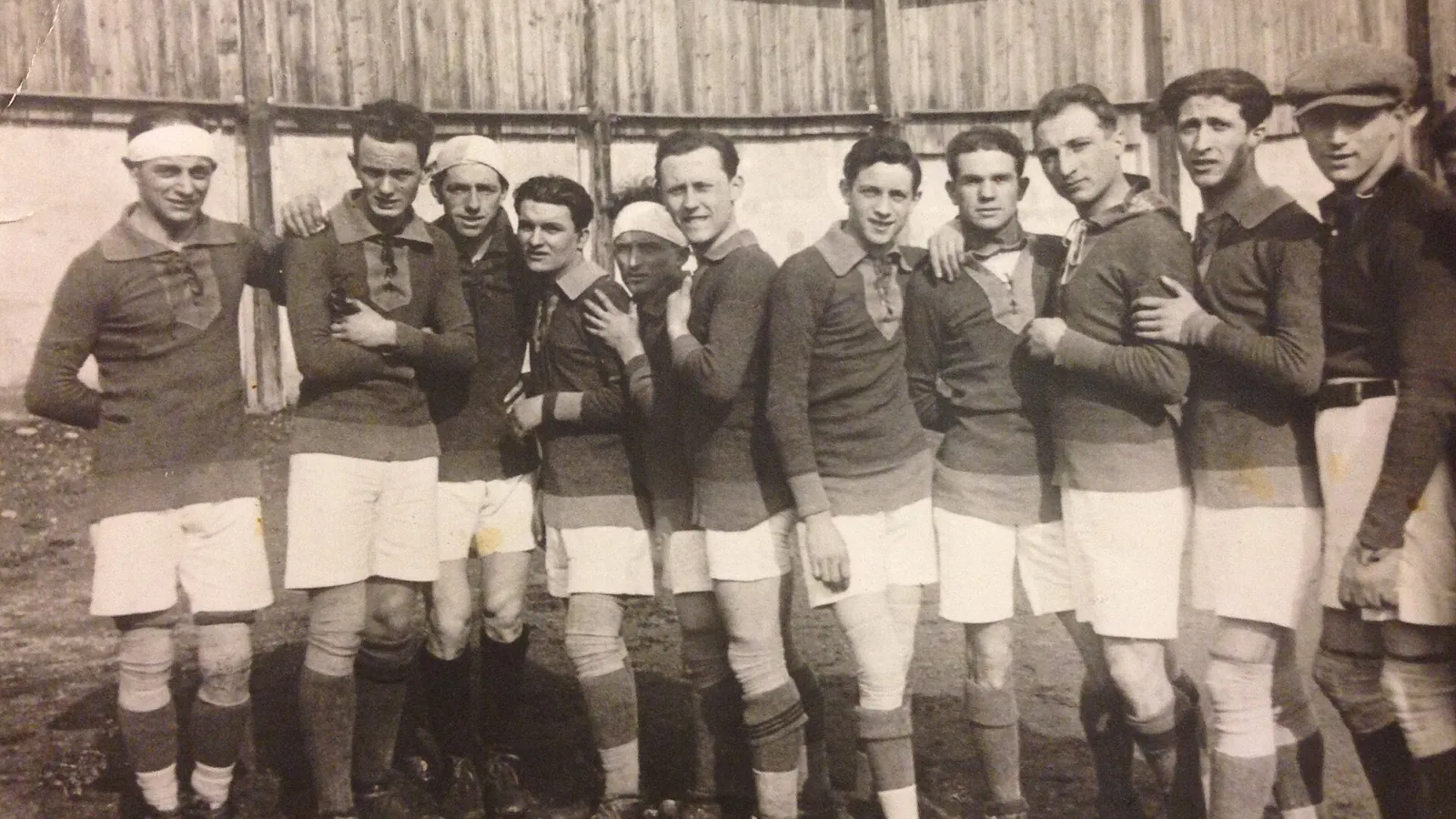
In the earliest years of the game, teams attacked with seven or eight forwards and passing was rare. By the 1880s, the 2-3-5, often called the pyramid, had become the standard shape in Britain: two full-backs, three half-backs and five forwards. Preston North End, unbeaten in the first Football League season of 1888–89, played a passing version of it.
The pyramid worked under the old offside law, which required three opponents between the attacker and the goal line. Defenders could step up and catch forwards offside easily, so goals were limited despite all those attackers.
Chapman's WM and the 1925 offside change
In 1925 the offside law changed from three opponents to two. Goals increased sharply, and the centre-half could no longer cover both midfield and defence. At Arsenal, Herbert Chapman dropped the centre-half between the full-backs to mark the opposing centre-forward. Two inside forwards dropped back to link with the half-backs, creating the WM, or 3-2-2-3.
Arsenal won five league titles in the 1930s, and the WM spread across English football. It was largely a man-marking system: full-back on winger, centre-half on centre-forward. That made it predictable, as England discovered in 1953.
Hungary 1953, Brazil 1958 and the 4-2-4
In November 1953 Hungary beat England 6–3 at Wembley, England's first home defeat by a team from outside the British Isles. Nándor Hidegkuti played as a deep-lying centre-forward. England's centre-half, used to marking a number 9 who stayed high, did not know whether to follow him into midfield or hold his position. The man-marking WM had no answer to a forward who moved.
Five years later Brazil won the 1958 World Cup with a 4-2-4. A fourth defender gave cover across the back line, two midfielders controlled the centre and four forwards attacked. It was the start of the back four that most teams still use.
England's own answer came in 1966. Alf Ramsey's World Cup winners played without traditional wingers, in a 4-4-2 with a midfield of hard-working players. They were nicknamed the 'wingless wonders'. Ramsey chose a system that suited the players he had, rather than the other way round.
Catenaccio and the libero
Italian football developed catenaccio, meaning 'door bolt', in the 1950s and 1960s. Helenio Herrera's Inter won the European Cup in 1964 and 1965 with it. Man-markers picked up each forward, while a free defender behind them, the libero or sweeper, covered any mistake. Attacks were fast counter-attacks, often with Giacinto Facchetti, a full-back who raided forward on the left.
England used a sweeper too. At the 1990 World Cup, Bobby Robson's team switched to a back three with Mark Wright as sweeper for part of the tournament and reached the semi-final.
Total football and zonal pressing
In the early 1970s Ajax won three European Cups in a row, and the Netherlands reached the 1974 World Cup final under Rinus Michels with Johan Cruyff. Total football asked every outfield player to attack, defend and swap positions. Defenders pushed up to squeeze space and the team pressed together to win the ball high.
In England, the most successful sides of the period, such as Liverpool under Bob Paisley, built on short passing and control. At the same time, a direct style based on long balls into the box became influential at many clubs in the 1980s.
Arrigo Sacchi's AC Milan, European champions in 1989 and 1990, turned pressing into a system. In a 4-4-2 with zonal marking, the team stayed compact, kept the distance between defence and attack short, and moved as a block towards the ball. Defending was about controlling space, not chasing opponents.
Positional play and modern pressing
Pep Guardiola's Barcelona (2008–2012) and later Manchester City brought positional play to the top of the game. The pitch is divided into zones, players occupy different vertical lanes and horizontal lines, and the ball moves to find the free player. Manchester City's 100-point Premier League season in 2017–18 showed how far the idea could go in England.
Alongside it came modern pressing to win the ball back immediately after losing it, associated with coaches such as Jürgen Klopp at Liverpool. The best teams today combine both: patient possession to create chances, and a fast, organised reaction to the loss of the ball.
For youth coaches, the modern game does not mean copying a Premier League system at U10. It means teaching the ideas behind it in age-appropriate formats: scanning, receiving on the half-turn, finding the free player and reacting when the ball is lost. Rondos and small-sided games teach these ideas better than drawing a formation on a whiteboard.
What youth coaches can take from each era
| Era | Key idea | How to use it with young players |
|---|---|---|
| 2-3-5 pyramid | Width and numbers in attack | Ask players to stay wide in 5v5 and 7v7 to open the middle |
| WM | Shape adapts to the rules | Rethink positions when moving to 9v9 and offside |
| Hungary and 4-2-4 | Movement beats fixed marking | Encourage forwards to drop and rotate |
| Catenaccio | Cover behind the ball | Teach the second defender to cover the first |
| Total football | Every player attacks and defends | Rotate positions across the season |
| Sacchi's pressing | Compactness and team defending | Short distances between players when defending |
| Positional play | Occupy space and find the free player | Rondos, scanning, receiving between lines |
Formations will keep changing. The principles underneath them, width, depth, cover, compactness and movement, have been the same for more than a century. Those are what young players need to learn.
Frequently asked questions
What was the first football formation?
Early teams played with seven or eight forwards and little structure. The first widely used system was the 2-3-5 pyramid, standard in Britain by the late 1880s.
What is the WM formation?
The WM, or 3-2-2-3, was developed by Herbert Chapman at Arsenal after the 1925 offside law change. The centre-half dropped into defence and two inside forwards dropped back, forming a W and an M shape.
What does catenaccio mean?
Catenaccio means 'door bolt' in Italian. It was a defensive system with man-markers and a free sweeper, or libero, behind them, used most famously by Helenio Herrera's Inter in the 1960s.
What is total football?
Total football was the Dutch approach of the early 1970s, with Ajax and the Netherlands, in which outfield players swapped positions, pressed high and all took part in attacking and defending.